Changes Fridge Lose Weight Fast
7 Smart Changes to Your Fridge to Lose Weight Fast: The Ultimate Guide
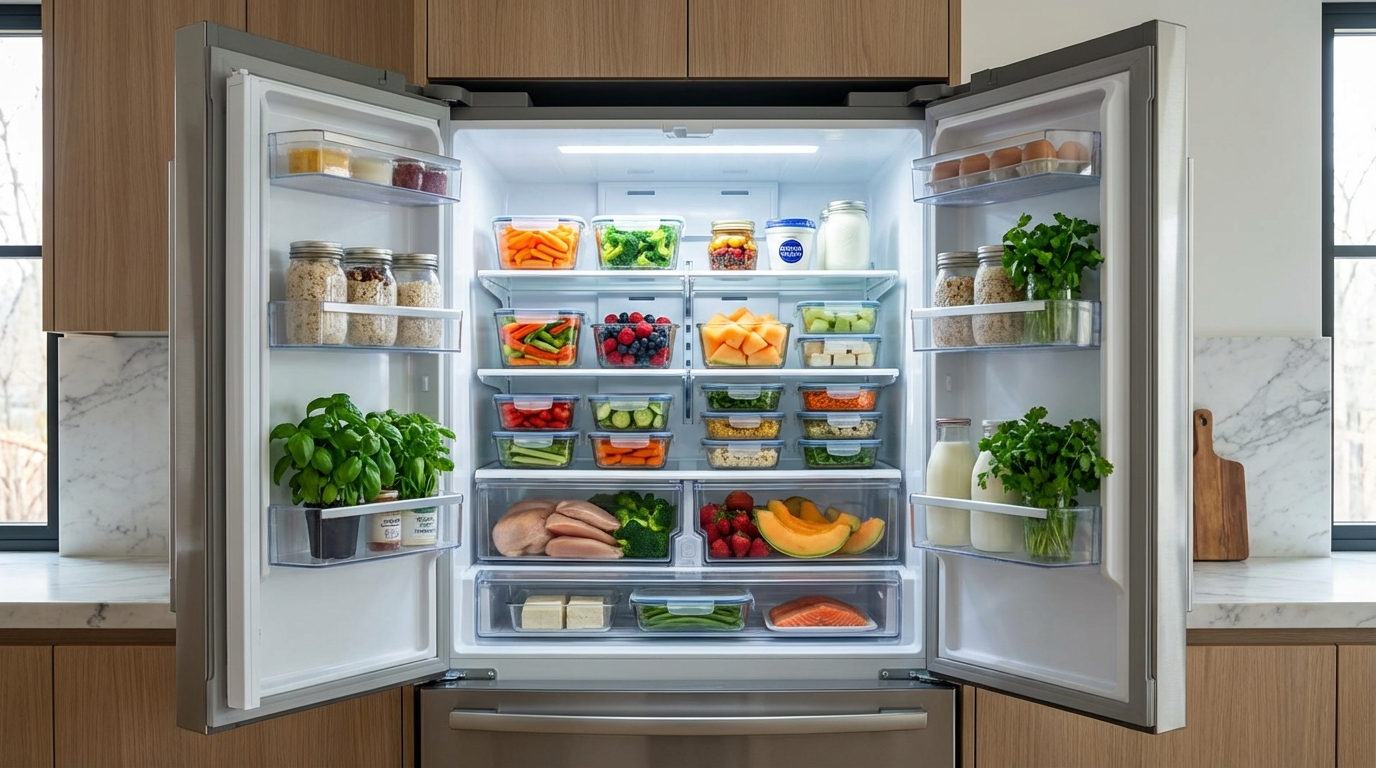
Your refrigerator is more than just a cold box for food storage—it is the gatekeeper of your diet and a primary determinant of your health. Every time you open that door, you are making a decision. But what if the decision was already made for you?
Research into environmental psychology and "food architecture" suggests that our eating habits are heavily influenced by convenience and visibility. A study referenced by the National Institutes of Health (NIH) found that simply rearranging the proximity of foods can significantly alter consumption patterns. When healthy foods are easier to reach and see, we eat more of them. Conversely, when junk food is hidden or harder to access, we eat less.
This comprehensive guide will walk you through seven strategic changes you can make to your fridge today to automate weight loss. We aren't just talking about buying kale; we are talking about designing an environment where weight loss becomes the path of least resistance.
The Science of Visual Cues: Why Your Fridge Matters
Before we dive into the organization strategies, it is crucial to understand the "why." The concept of "out of sight, out of mind" is scientifically validated when it comes to food. A study in the journal Appetite, available via the NIH, demonstrated that visual cues, such as seeing high-calorie foods, trigger a neurological response that mimics hunger, even if you just ate. This "visual hunger" can derail even the most disciplined dieters.
Did You Know? Neural responses to visual food cues are stronger in individuals struggling with obesity, particularly in the reward centers of the brain. Controlling your visual environment is a powerful tool for weight management.
By curating the visual inputs you receive every time you open the fridge, you can dampen these triggers. Your goal is to create a "choice architecture" that nudges you toward the apple and away from the leftover pizza. Let's look at how the layout of your fridge impacts your caloric intake.
Comparison: The Chaotic vs. The Curated Fridge
The difference between a fridge that hinders your progress and one that helps it can be measured in daily choices. Here is how a disorganized fridge compares to an optimized one.
| Feature | Chaotic Fridge (Weight Gain Risk) | Curated Fridge (Weight Loss Friendly) |
|---|---|---|
| First Impression | Clutter, leftovers in foil, soda cans, condiments. | Fresh produce, clear water pitchers, prepped protein. |
| Access Effort | Healthy food is buried in the crisper drawer (the "rotter" drawer). | Healthy snacks are washed, cut, and at eye level. |
| Decision Time | High decision fatigue; "What is there to eat?" | Low friction; "Grab and go." |
| Trigger Foods | Visible on the main shelf. | Hidden in opaque bins or not purchased at all. |
Change #1: The Eye-Level Audit
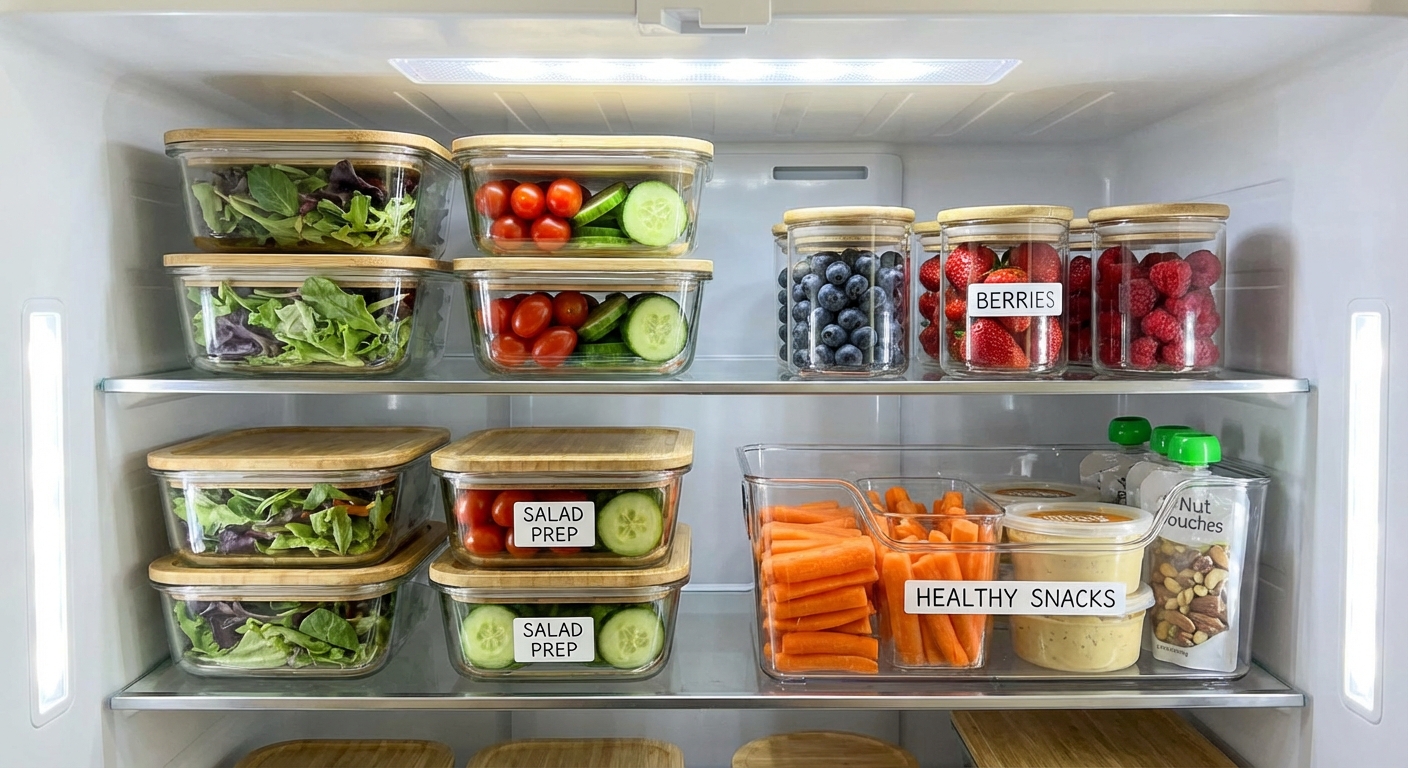
The most prime real estate in your refrigerator is the middle shelf, right at eye level. This is where your gaze naturally lands. In most homes, this shelf is cluttered with leftovers, jams, or large beverage containers. For weight loss, this shelf must be exclusively reserved for the foods you want to eat more of.
Conduct an audit right now. Open your fridge. What is the first thing you see? If it's a jar of mayo or a block of cheese, move it. Replace these items with:
- Pre-cut vegetable sticks (carrots, celery, bell peppers)
- Fresh berries in clear bowls
- Greek yogurt or high-protein snacks
- Hard-boiled eggs
By placing high-nutrient, low-calorie foods in this "Goldilocks zone," you reduce the cognitive load required to make a healthy choice. You are essentially advertising healthy habits to yourself multiple times a day.
Change #2: Create a Dedicated 'Hydration Station'
Thirst is often mistaken for hunger. A study from the Harvard T.H. Chan School of Public Health highlights that substituting water for caloric beverages is a simple yet effective strategy for weight management. Sugary sodas, fruit juices, and even sweetened iced teas can contribute hundreds of invisible calories to your daily total.
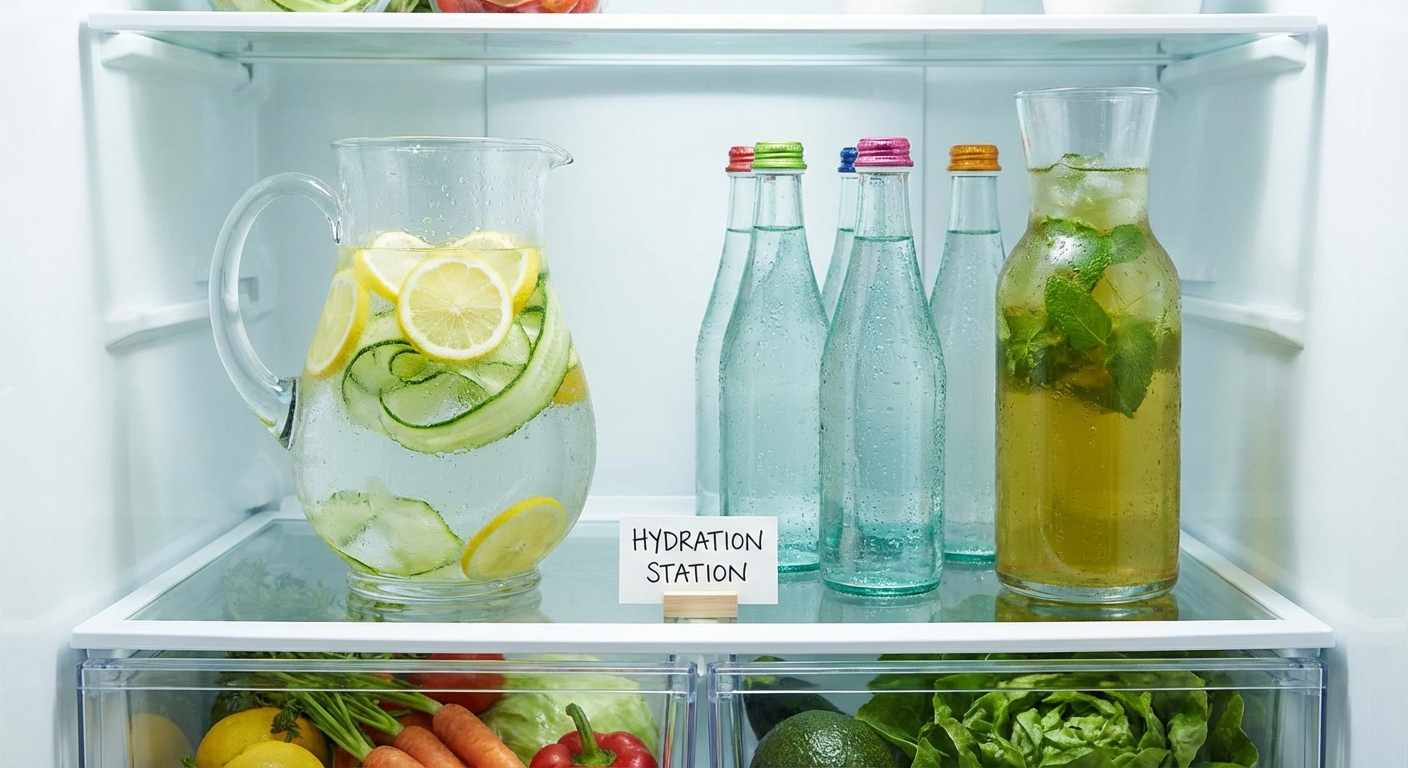
Transform one side of a shelf into a "Hydration Station." This area should look appealing and refreshing. Remove soda cans entirely. Instead, stock:
- A pitcher of cold filtered water.
- "Spa water" infused with cucumber, lemon, mint, or strawberries.
- Sparkling water (plain or naturally flavored).
- Unsweetened iced tea.
Visual appeal matters here. A beautiful glass pitcher with floating lemon slices looks more appetizing than a crushed can of diet soda. When cold, flavorful water is the most attractive option, you will drink more of it, keeping your metabolism humming and your appetite in check.
Change #3: Remove Barriers with Pre-Cut Produce
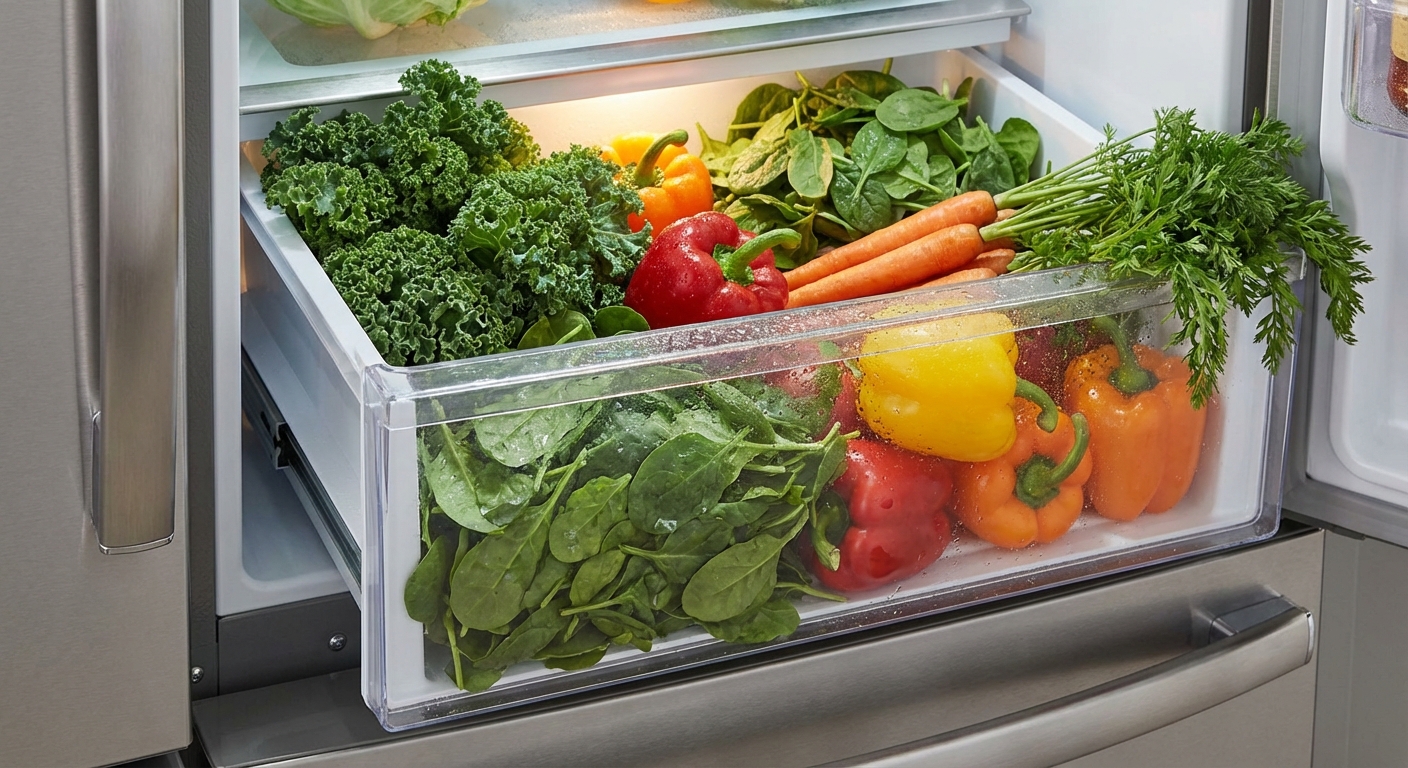
We often put fresh produce in the crisper drawers to keep it fresh, but for many, the crisper drawer becomes a coffin for good intentions. If you have to wash, peel, and chop a carrot when you are hungry, you probably won't do it. You will grab the chips instead because they are "ready to eat."
The solution is to lower the barrier to entry.
As soon as you bring groceries home, wash and chop your vegetables. Store them in clear containers on that prime eye-level shelf we discussed. If you must use the crisper drawers for space, ensure the produce inside is visible and accessible. Treat vegetables like fast food.
Checklist: The "Ready-to-Eat" Protocol
Use this checklist immediately after grocery shopping to ensure your fridge works for you, not against you.
| Task | Why It Helps Weight Loss |
|---|---|
| Wash Berries | Makes them an instant grab-and-go snack. |
| Chop Veggies | Removes the "too much effort" excuse during snack cravings. |
| Portion Hummus/Dip | Prevents overeating from the main container. Check out our guide on hummus benefits for ideas. |
| Marinate Proteins | Ensures you have a flavorful, healthy main dish ready to cook in minutes. |
Change #4: The Power of Transparent Containers
Your brain needs to know what is available. Opaque Tupperware and aluminum foil are enemies of a weight loss fridge. You forget what is inside, leading to food waste and missed opportunities for a healthy meal. A study on food visibility suggests that clear packaging increases consumption frequency.
Invest in a set of high-quality glass storage containers. Glass is superior to plastic for several reasons:
- Visibility: You see the vibrant colors of your salad or roasted veggies immediately.
- Safety: Glass is free from BPAs and chemicals that can disrupt hormones (which can impact weight).
- Durability: They don't stain or hold odors.
When you open your fridge and see a stack of clear containers filled with quinoa, grilled chicken, and roasted broccoli, your brain registers "meal" instantly. This visual availability combats the urge to order takeout.
Change #5: The "Indulgence" Drawer (Or The Opaque Bin)
Complete deprivation often leads to binging. It is okay to have treats, but they should not be the star of the show. If you keep high-calorie treats like cheese, chocolate, or pudding, hide them.
Designate one of the lower drawers or an opaque bin on a bottom shelf as the "Indulgence Zone." If you want a treat, you have to actively seek it out. You have to open the drawer and look for it. This adds a layer of friction—a "pause point"—that gives your executive brain a chance to intervene and ask, "Do I really want this?"
This strategy leverages the concept of "friction" in habit formation. You want to increase friction for bad habits (hiding junk food) and decrease friction for good habits (displaying healthy food).
Change #6: Establish Strategic Fridge Zones
Total disorganization leads to decision fatigue. When you are tired and hungry, you don't want to hunt for ingredients. Organizing your fridge into specific zones can streamline your meal prep and eating habits.
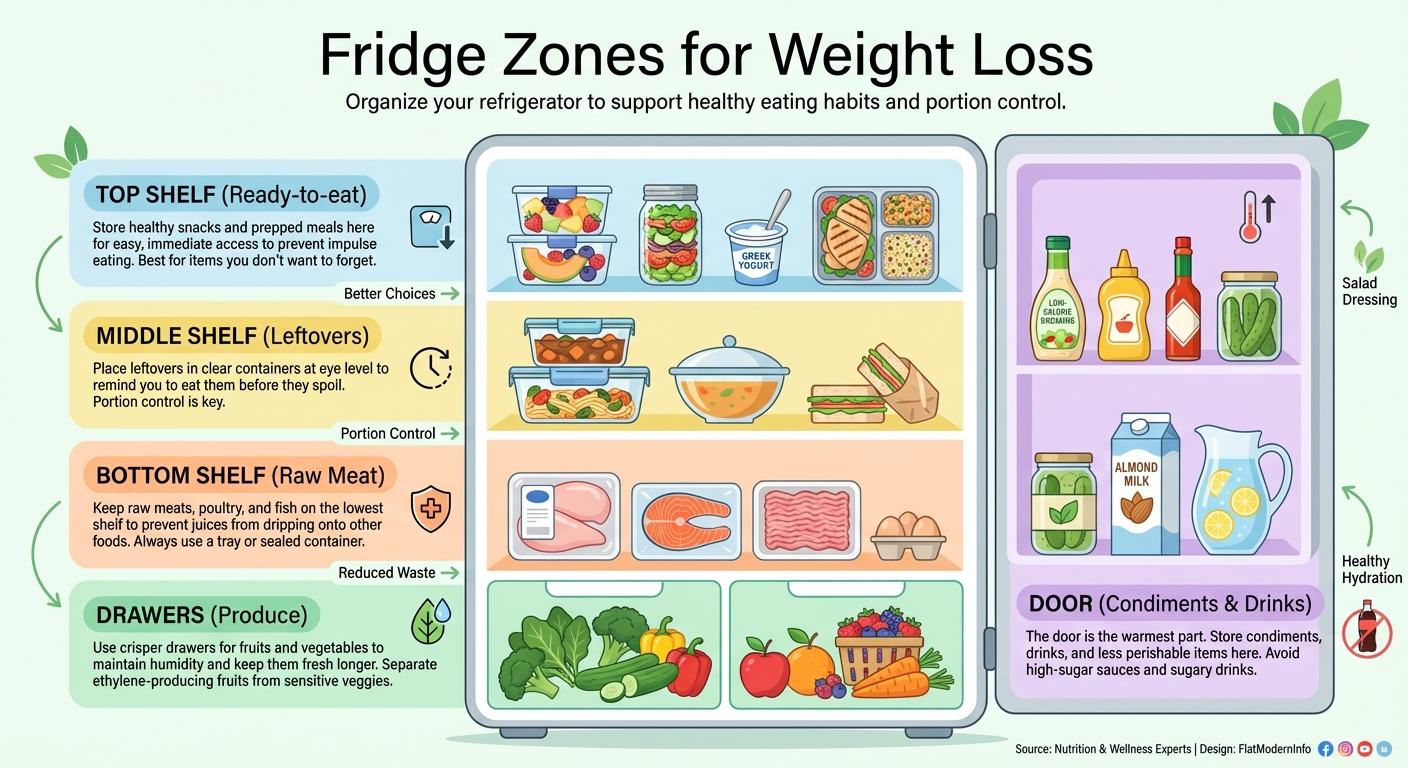
Here is a zoning strategy optimized for weight loss:
- Top Shelf (The "Now" Zone): Ready-to-eat healthy snacks, leftovers that need to be eaten immediately, and grab-and-go breakfasts (like overnight oats).
- Middle Shelf (The Prep Zone): Meal prep containers for the week. This is your "menu" for the next few days.
- Bottom Shelf (The Raw Zone): Raw meats and ingredients that require cooking. Keeping them low prevents cross-contamination and keeps them out of your immediate line of sight when you are just looking for a snack.
- The Door (The Condiment Zone): This is the warmest part of the fridge. Store condiments, dressings, and drinks here. Be careful with dressings—calories hide here.
For more on structuring your diet and lifestyle, you might find our 20 steps to lose extra weight incredibly useful.
Change #7: Weekly Fridge Rituals
A disorganized fridge often reflects a disorganized diet. Make fridge maintenance a weekly ritual, ideally right before your grocery run. This isn't just about hygiene; it's about resetting your intentions for the week.
The Weekly Reset:
- Toss the Old: Throw out expired food. Old leftovers are unappealing and crowd out fresh options.
- Wipe Down Surfaces: A sparkling clean fridge feels like a sanctuary for fresh food. You are less likely to put a greasy pizza box on a pristine glass shelf.
- Restock the Stations: Refill your hydration station and move the new produce to the front.
Maintaining this ritual helps you stay mindful of what you are eating. It also helps you track what you didn't eat. Did you throw away a bag of spinach again? Maybe next week, buy frozen spinach for smoothies instead. Use this feedback loop to refine your shopping list.
Integrating Supplements and Maintenance
While diet is paramount, some people find support in weight loss supplements to bridge nutritional gaps or support metabolism. However, no pill can replace a poor diet or a chaotic kitchen environment. Think of your fridge organization as the foundation upon which other strategies—like supplements or specific exercise plans—are built.
Once you have lost the weight, the challenge shifts to maintenance. The habits you build now, like keeping cut veggies at eye level, are the same habits that will help you shed pounds and keep them off long-term. Maintenance is just the permanent application of these smart choices.
Conclusion
Changing your body starts with changing your environment. You don't need superhuman willpower to lose weight; you need a smarter strategy. By reorganizing your fridge, you manipulate the variables of visibility and convenience in your favor. As the Mayo Clinic advises, getting started with tangible changes is key.
Start with one change today. Move the water pitcher to the front. Chop those carrots. Hide the cheese. These small, tangible actions compound over time, leading to effortless calorie reduction and a healthier relationship with food. Your fridge is a tool—make sure it's building the body you want.