Rapamycin and Longevity: The Anti-Aging Drug Researchers Are Watching
Evidence-based guide to rapamycin for longevity covering mTOR science, animal studies, human clinical trials, dosing protocols, and safety data.
13 Min Read
A soil sample from Easter Island changed aging research
In 1972, a Canadian research expedition collected soil samples from Rapa Nui, the remote Pacific island most people know as Easter Island. One of those samples contained a bacterium called Streptomyces hygroscopicus, and the compound it produced would eventually become one of the most studied molecules in aging research. That compound was rapamycin, named after the island where it was found.
Researchers initially noticed rapamycin had potent antifungal properties. Then they discovered it could suppress immune responses, which led to its FDA approval in 1999 under the brand name Rapamune (sirolimus) for preventing organ transplant rejection. It later earned additional approvals for treating certain cancers and a rare lung disease called lymphangioleiomyomatosis.
But a different property of rapamycin is what has the longevity research community paying close attention. Rapamycin inhibits a protein called mTOR (mechanistic target of rapamycin), and growing evidence suggests that overactive mTOR signaling accelerates aging itself. Block it at the right dose, at the right time, and you might slow the biological clock.
That is a big "might." What rapamycin does in lab animals and what it can safely do in healthy humans are very different conversations. Here is where the science actually stands.
The mTOR switch that controls how cells age
To understand why rapamycin interests longevity researchers, you need to understand the protein it targets. mTOR is a master regulator inside cells. It decides when to grow and divide, and when to switch into maintenance and repair mode. It exists in two complexes, mTORC1 and mTORC2, and they do different things.
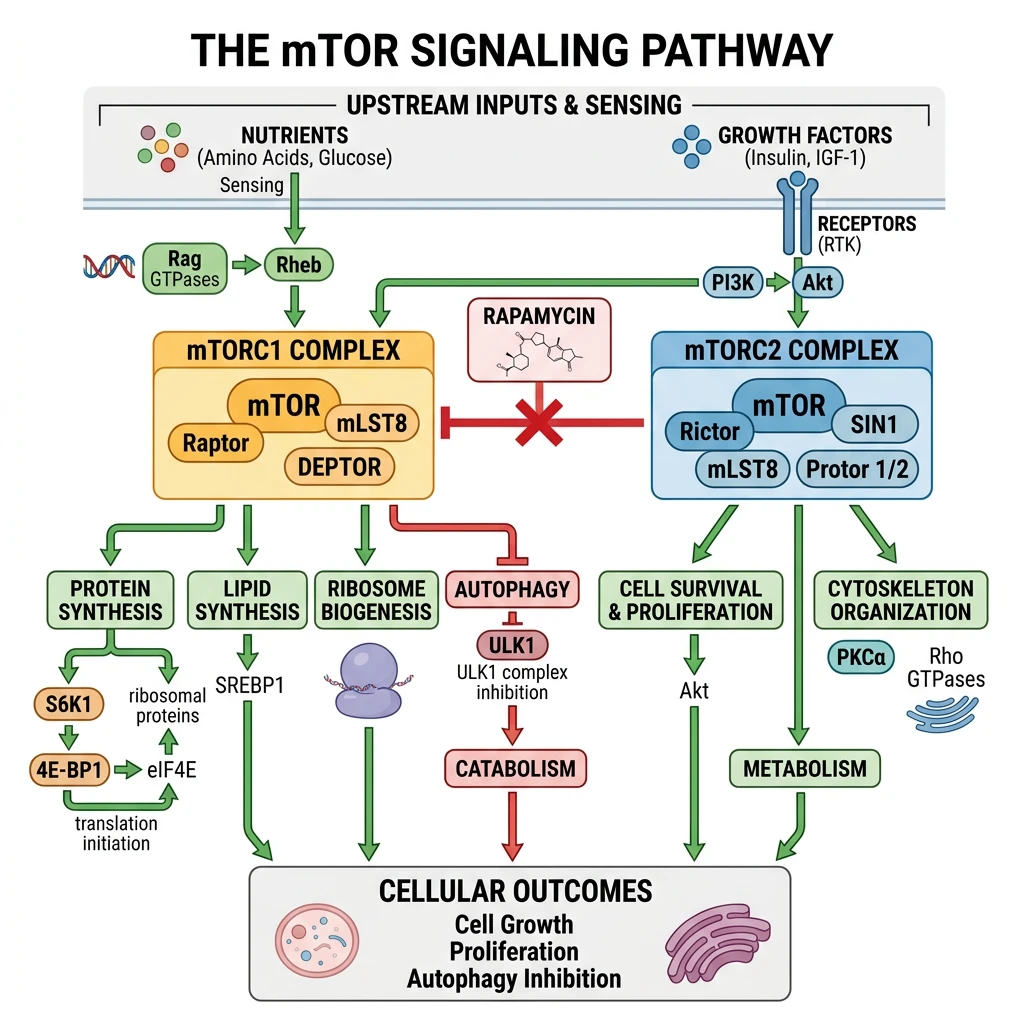
When nutrients and growth signals are abundant, mTORC1 ramps up protein synthesis, cell growth, and energy consumption. When nutrients are scarce, as during fasting or caloric restriction, mTORC1 activity drops, and the cell shifts toward autophagy: a recycling process that clears damaged proteins and dysfunctional organelles.
The problem, from an aging perspective, is that mTORC1 stays chronically active in well-fed modern humans. According to a 2024 systematic review in The Lancet Healthy Longevity, at least five of the twelve recognized hallmarks of aging are modulated by the mTOR pathway. Tissue-level mTOR activity rises with age and correlates with the accumulation of cellular damage that drives age-related disease.
Rapamycin binds to a protein called FKBP12, forming a complex that directly inhibits mTORC1. This mimics the biochemical signals of nutrient scarcity, pushing cells from growth mode into repair mode without requiring actual caloric restriction. Researchers call it a "caloric restriction mimetic," and that property is why it keeps showing up in aging research.
The complication: chronic rapamycin exposure also partially inhibits mTORC2, which regulates insulin signaling and glucose metabolism. This off-target effect is thought to drive some of the metabolic side effects seen in clinical settings. It is hard to get the anti-aging benefits without also triggering metabolic disruptions.
What happened when researchers gave aging mice rapamycin
The moment rapamycin went from theoretical interest to headline news came in 2009, when David Harrison and colleagues published a landmark study in Nature. They fed rapamycin to genetically diverse mice starting at 600 days of age, roughly equivalent to a 60-year-old human. Females lived 14% longer and males 9% longer, based on the age at which 90% of each group had died.
Three facts made this study unusually credible. It was conducted simultaneously at three independent laboratories, reducing the chance that facility-specific quirks explained the results. The mice were genetically heterogeneous, which avoids the problem of results that only apply to a single inbred strain. And the lifespan extension occurred even when the drug was started late in life. You did not have to begin at birth to see benefits.
| Species | Lifespan Extension | Source |
|---|---|---|
| Yeast | Up to 20% | Multiple studies |
| Worms (C. elegans) | Up to 19% | Robida-Stubbs et al. |
| Fruit flies (Drosophila) | Up to 24% | Bjedov et al. |
| Mice | 9–60% (dose-dependent) | Harrison et al., 2009; ITP studies |
Subsequent studies through the NIA Interventional Testing Program confirmed and extended these findings. In mice, the lifespan benefit is dose-dependent: higher doses generally produce greater extension, up to roughly 60% in certain short-lived mutant strains. Rapamycin also delayed or reduced age-related pathologies including cancer, cognitive decline, and cardiac hypertrophy.
Whether rapamycin extends life by broadly slowing aging or primarily by suppressing cancers (the main killer in many mouse strains) remains debated. A 2014 review in Cell and Molecular Life Sciences concluded the evidence best fits a model where cancer suppression is the primary mechanism, with additional benefits on other aging traits. Other researchers, particularly Mikhail Blagosklonny, argue rapamycin slows aging itself through what he calls the "hyperfunction theory," the idea that aging is driven by growth pathways that remain inappropriately active after development is complete.
Human trials and what they actually show
Mice are not humans, and this is where things get sobering. A 2025 review published in Aging put it plainly: the clinical evidence for low-dose rapamycin as a longevity drug in healthy humans "has yet to establish that rapamycin is a proven seno-therapeutic that can delay aging."
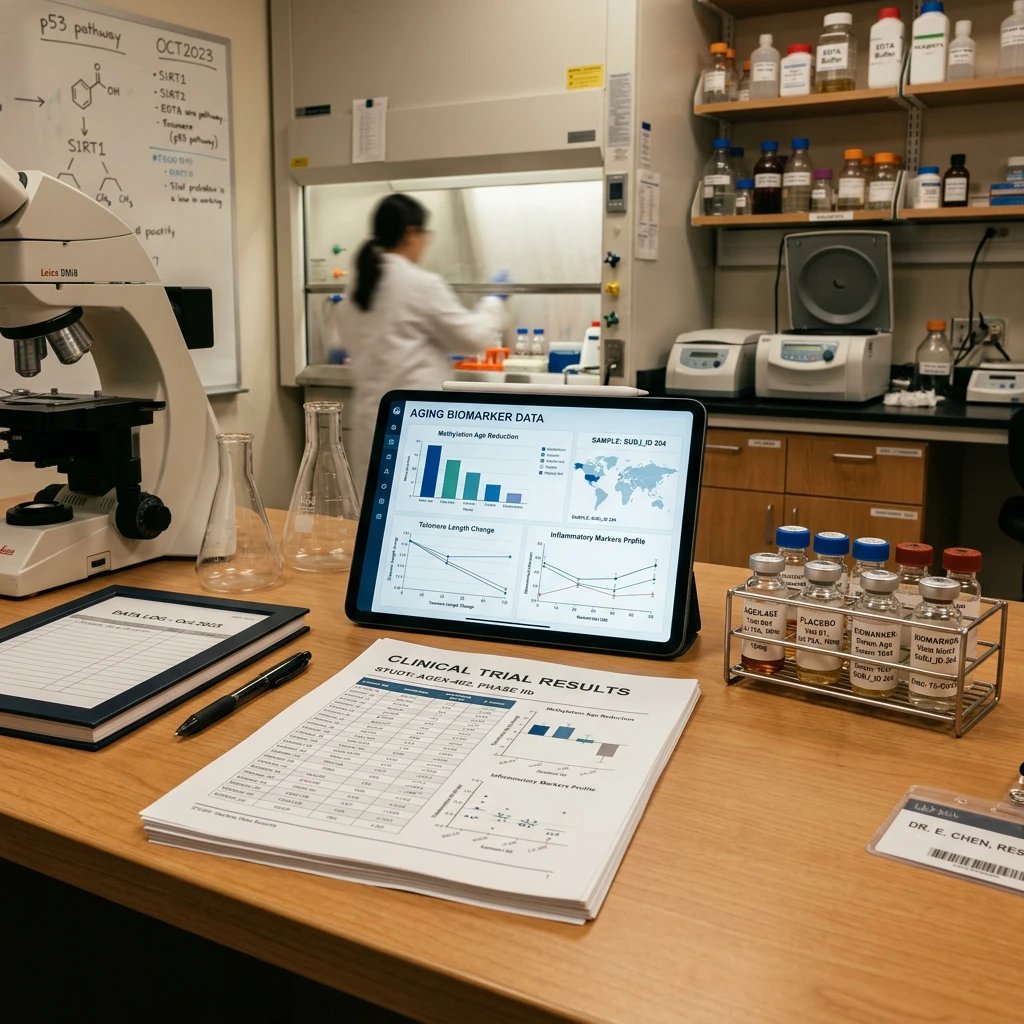
Fewer than a dozen clinical trials have evaluated rapamycin or its analogs (rapalogs) in healthy adults. Here is what they found:
| Trial | Year | Participants | Key Finding |
|---|---|---|---|
| Mannick et al. | 2014 | 218 healthy elderly | Low-dose everolimus boosted immune response to flu vaccine by 20% |
| Kraig et al. | 2018 | 25 adults aged 70-95 | 1 mg/day for 8 weeks: decreased red cell distribution width (youthful marker), maintained gait speed; increased triglycerides and HbA1C |
| PEARL Trial | 2020-2023 | 129 adults aged 50-85 | Intermittent low-dose rapamycin well tolerated for 1 year; modest biomarker changes |
| Kaeberlein et al. | 2023 | Community cohort | Self-reported lower COVID infection rates, improved wellbeing (not blinded) |
The Mannick study gets cited more than any other. Healthy older adults who received low-dose everolimus (a rapamycin analog) showed a 20% improvement in antibody response to influenza vaccination. Their immune cells also had lower levels of PD-1, a marker associated with immune exhaustion. This was surprising: rather than suppressing immunity, low-dose mTOR inhibition seemed to make it work better.
The PEARL trial (Participatory Evaluation of Aging With Rapamycin for Longevity), a Phase 2 placebo-controlled study registered at ClinicalTrials.gov, enrolled 129 adults and assessed intermittent weekly rapamycin over one year. Results showed the drug was well tolerated, with modest changes in biomarkers of biological aging, but not the dramatic health improvements some proponents had hoped for.
The Kraig study provided perhaps the most interesting modeling result. When researchers applied the PhenoAge biological aging clock to their data, the rapamycin group showed a biological age reduction of nearly 4 years over 8 weeks, compared to essentially no change in the placebo group. But the study included only 25 participants and lasted just 8 weeks. Too small and too brief to draw firm conclusions.
The bottom line on human evidence: Low-dose, intermittent rapamycin appears safe in the short term for healthy adults. There are signals of immune enhancement and possible biological age reduction. But no trial has demonstrated that rapamycin extends human lifespan or meaningfully prevents age-related disease. The evidence is promising but preliminary.
5-7 mg once a week: inside the dosing debate
Transplant patients typically take rapamycin daily at doses of 2-5 mg, aiming for continuous immunosuppression. The longevity community uses a very different approach: intermittent, lower doses designed to pulse mTORC1 inhibition while allowing recovery between doses.
The most common off-label longevity schedule is 5-7 mg taken once weekly. The logic comes from animal studies: a high peak blood level followed by a drug-free period seems to maximize the anti-aging effects while giving the body time to recover, particularly from the metabolic disruptions caused by chronic mTORC2 inhibition.
| Protocol | Dose | Evidence Base |
|---|---|---|
| Transplant (standard) | 2-5 mg daily, continuous | Decades of clinical use |
| Longevity (common) | 5-7 mg once weekly | Animal studies + off-label clinical experience |
| Low-dose daily | 1 mg daily | Kraig et al. 2018 — safe in 70-95 year olds for 8 weeks |
| Alternating cycles | Weekly for 3 months, 1 month off | Theoretical, based on intermittent dosing principles |
In mice, the dose-response relationship is simple: more rapamycin, longer life, up to a point. In humans, nobody knows. A daily dose of 1 mg produced no detectable side effects in elderly adults but showed mixed results on metabolic markers. The once-weekly pulse may be the sweet spot, but that has never been tested head-to-head against daily dosing in a controlled human trial.
Blagosklonny has argued for something more personalized: disease-oriented dosing. The idea is that the optimal dose should target whichever age-related disease is most likely to kill you. Someone at high cancer risk might need a higher dose than someone whose primary risk is cardiovascular. Makes sense on paper. Nobody has tested it.
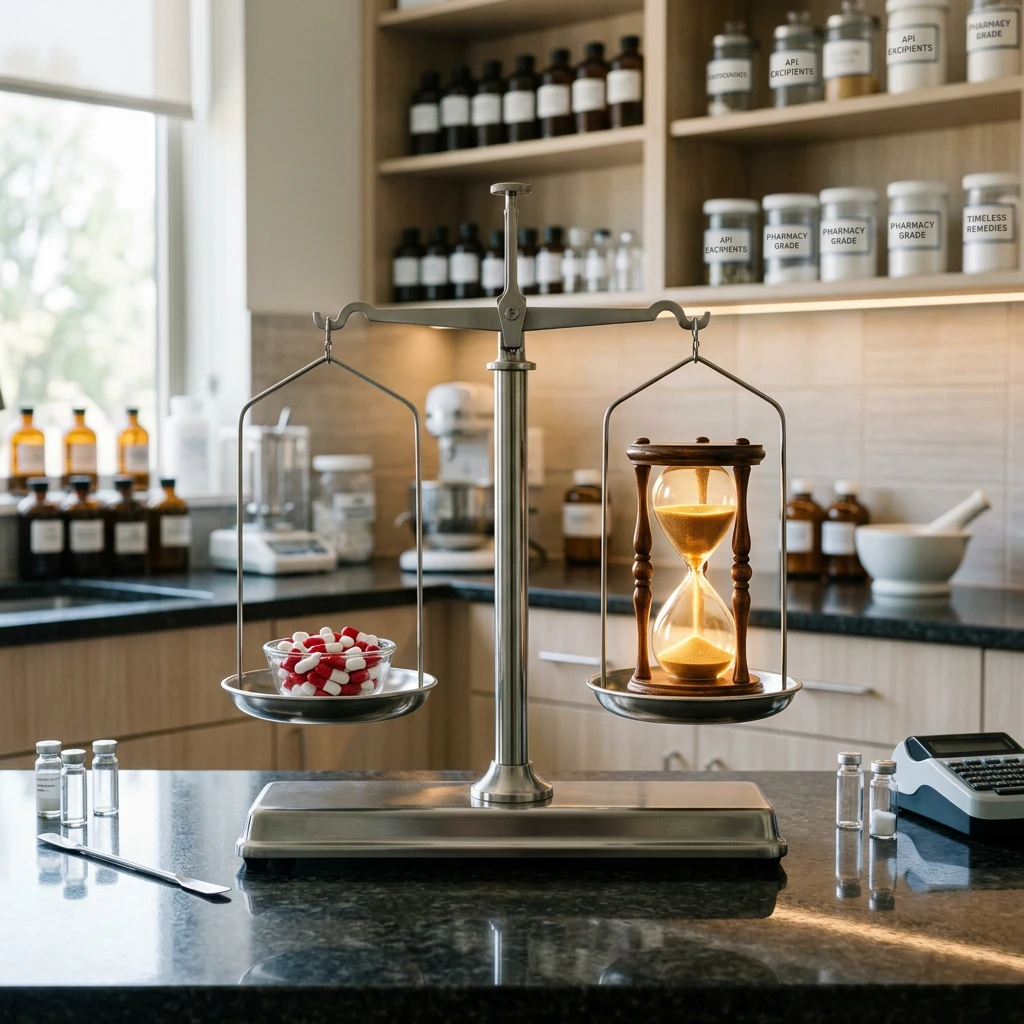
What could go wrong: side effects and unresolved safety questions
Rapamycin's side effect profile is well-documented from decades of transplant use, but the relevance of those observations to healthy people taking low doses for longevity is unclear. Transplant patients take the drug daily at immunosuppressive doses, often alongside other medications that compound side effects.
At high clinical doses, documented side effects include:
- Mouth sores (stomatitis). This is the most common complaint and usually resolves on its own.
- Elevated cholesterol and triglycerides. Multiple studies have documented this, including the Kraig trial.
- Impaired wound healing. mTOR inhibition slows cell proliferation, so cuts and surgical wounds take longer to close.
- Increased susceptibility to infections, particularly bacterial skin infections.
- Glucose intolerance. Chronic mTORC2 inhibition can drive insulin resistance.
- Mild anemia and low platelet counts.
Blagosklonny's counterargument is blunt: the alternative to the reversible side effects of rapamycin are the irreversible effects of aging, including cancer, stroke, heart attack, and blindness. He points out that aspirin, taken daily by millions, carries risks of life-threatening gastric bleeding. If people accept that tradeoff, he argues, rapamycin's risk-benefit ratio may be more favorable.
In placebo-controlled studies of healthy elderly adults, low-dose rapamycin showed no significant side effects compared to placebo. In one study, the placebo group actually reported more fatigue than the rapamycin group. And there is a striking case report that gets mentioned in nearly every rapamycin review: an 18-year-old who ingested 103 rapamycin tablets in a suicide attempt experienced nothing worse than temporarily elevated cholesterol.
Not everyone is convinced, though. Tech entrepreneur Bryan Johnson publicly discontinued rapamycin from his extensive anti-aging regimen, citing elevated blood glucose, increased infections, and impaired healing. The Kraig trial showed increases in triglycerides and HbA1C even at just 1 mg daily. There is also a less-discussed concern about autophagy in older people: clearing damaged cells is good, but autophagy can also help established tumors survive. For someone with an undiagnosed cancer, that could be a problem.
Long-term safety data for healthy humans taking rapamycin purely for longevity simply does not exist. Every current assessment is extrapolated from short-term studies, transplant populations, or animal models.
Rapamycin vs. caloric restriction: two roads to the same pathway
Caloric restriction (CR) remains the most replicated lifespan-extending intervention in laboratory animals. Since the 1930s, reducing calorie intake by 20-40% without malnutrition has extended lifespan in yeast, worms, flies, rodents, and to a debated degree, primates. The connection to rapamycin is direct: CR works in large part by reducing mTORC1 activity, the same target rapamycin hits pharmacologically.
This makes rapamycin a "caloric restriction mimetic": a drug that triggers CR-like cellular responses without requiring anyone to eat less. If you have ever tried eating 30% fewer calories for more than a few weeks, you understand the appeal. But the comparison only goes so far.
CR activates multiple longevity-associated pathways beyond mTOR, including AMPK activation and sirtuin upregulation. Rapamycin targets mTOR specifically. Whether hitting one pathway with a drug produces the same systemic benefits as the broad metabolic shift of actual CR is unknown. While NAD+ precursors and other compounds target different longevity pathways, the mTOR pathway remains among the most well-studied in aging research.
Some longevity-focused physicians combine rapamycin with other CR mimetics like metformin, drawing on Blagosklonny's suggestion of complementary pathway coverage. Nobody has tested this combination in a clinical trial, and the interactions between multiple pathway-modifying drugs in aging humans are poorly understood.
Exercise, particularly zone 2 cardio, also reduces mTOR activity and promotes autophagy through different mechanisms. Some researchers have raised concerns that rapamycin could blunt exercise adaptations by suppressing the mTOR-dependent protein synthesis needed for muscle repair and growth after resistance training. The Gunderman 2014 study found that a single 16 mg dose of rapamycin blunted post-exercise increases in protein synthesis, though this was at a dose far higher than typical longevity protocols.
Frequently Asked Questions
Is rapamycin FDA-approved for anti-aging?
No. Rapamycin (sirolimus) is FDA-approved for preventing organ transplant rejection and treating lymphangioleiomyomatosis. The FDA does not currently recognize aging as a treatable disease. Any use for longevity purposes is off-label, and physicians who prescribe it for this purpose do so based on emerging research rather than regulatory approval. The Mayo Clinic classifies sirolimus as a "very strong medicine" with potentially serious side effects.
How much does rapamycin cost for longevity use?
Generic sirolimus is cheap as a raw medication, often under $2 per milligram. The total cost is a different story. Online longevity clinics that prescribe and monitor patients typically charge between $64 and $700+ per month once you add membership fees, lab work, and consultations. That puts rapamycin longevity therapy out of reach for most people, which says something about who actually gets to experiment with anti-aging drugs.
Can I take rapamycin with supplements like NMN or metformin?
Some longevity practitioners prescribe rapamycin alongside metformin, NMN, or other compounds targeting different aging pathways. No clinical trials have evaluated these combinations specifically for longevity, though. Rapamycin has significant drug interactions, including with CBD, grapefruit juice, and many common medications. Any use should be supervised by a physician who monitors blood levels and metabolic markers.
Does rapamycin actually extend human lifespan?
There is no direct evidence that rapamycin extends human lifespan. The drug consistently extends lifespan in mice by 9-14% when started in middle age, and benefits have been observed across yeast, worms, flies, and multiple mouse strains. In humans, short-term trials show it is tolerable and may improve certain biomarkers of aging. But proving lifespan extension in humans would require decades-long studies that have not been conducted and may not be financially feasible for a generic drug.
What is the difference between rapamycin and everolimus?
Everolimus is a rapamycin analog (rapalog) with a modified chemical structure that gives it improved oral bioavailability and a shorter half-life. Both drugs inhibit mTORC1 through the same mechanism. Everolimus is marketed as Afinitor for cancer treatment and was used in several key longevity studies, including the Mannick immune function trials. For longevity purposes, rapamycin (sirolimus) is more commonly prescribed because it is available as an inexpensive generic.
Related Articles
- NAD+ and NMN Supplements for Aging and Cellular Repair — How NAD+ precursors target a different arm of the cellular aging machinery, and what the supplement research shows.
- Intermittent Fasting Schedules Compared: 16:8 vs 20:4 vs OMAD — Fasting activates many of the same autophagy pathways that rapamycin targets, without the drug.
- Zone 2 Cardio for Fat Burning and Longevity — Low-intensity exercise is another mTOR modulator with strong longevity evidence and zero prescription needed.
- Creatine Benefits Beyond Muscle — Brain, Bone, and Longevity — A well-studied supplement with emerging longevity connections through different mechanisms than mTOR.
- Fucoxanthin: What Clinical Research Actually Shows About Longevity — Another compound being studied for longevity through metabolic pathways.
Medical Disclaimer
This article is for informational and educational purposes only and is not medical advice, diagnosis, or treatment. Always consult a licensed physician or qualified healthcare professional regarding any medical concerns. Never ignore professional medical advice or delay seeking care because of something you read on this site. If you think you have a medical emergency, call 911 immediately.