How to Choose Targeted Topical Creams for Chronic Back Inflammation
Compare diclofenac, capsaicin, lidocaine, and menthol creams for chronic back inflammation. Evidence-based guide to choosing the right topical treatment.
13 Min Read
What Makes Back Inflammation Different From General Soreness
You hiked too hard on Saturday, your back aches on Sunday, and by Monday you're mostly fine. That's soreness. Chronic back inflammation is something else entirely. It sticks around for weeks or months because your immune system keeps sending inflammatory signals long after the original injury has healed. The tissue around your spine stays swollen, nerves stay irritated, and getting out of a chair becomes a whole negotiation.
Most chronic back inflammation falls into one of two buckets. Mechanical problems -- degenerative disc disease, facet joint arthritis, spinal stenosis -- where structural wear keeps triggering inflammation. Or systemic conditions like ankylosing spondylitis and rheumatoid arthritis, where the immune system goes after spinal tissues on its own. Which one you're dealing with determines what treatment makes sense, and that includes which cream you pick up at the pharmacy.
Topical creams offer a way around one of the biggest problems with oral NSAIDs like ibuprofen: they travel your entire bloodstream and can tear up your stomach lining. Topical versions skip that and deliver the drug directly to the sore area. According to research in the Journal of the American Board of Family Medicine, topical NSAIDs produce just 2-8% of the blood concentrations you'd get from a pill. So your inflamed back still gets the medication, but your stomach, kidneys, and cardiovascular system mostly stay out of it.
Key fact: Topical anti-inflammatories reduce your body's exposure to active medication by roughly 90% compared to oral versions, making them a safer first-line option for localized chronic pain.
The problem is that "topical cream" covers a lot of ground. Some products actually fight inflammation. Others just numb you or distract your nerves with a cooling sensation. If you don't know the difference, you could end up spending $15 on something that feels nice for 20 minutes and does nothing for the swelling.
Five Active Ingredients That Target Back Inflammation
Walk down the pain relief aisle and you'll see dozens of products that all claim to help your back. The ingredients vary a lot, though, and so do the mechanisms. A few actually reduce inflammation. Others block pain signals or just create a competing sensation so your brain pays less attention to the pain. Here's how they compare.
Diclofenac (Topical NSAIDs)
If you want a topical that actually reduces inflammation rather than just masking pain, diclofenac is where you start. It's a COX-2 inhibitor -- it blocks the enzymes that produce prostaglandins, the molecules behind inflammation and swelling. You can buy it over the counter as Voltaren gel (1%) or get stronger concentrations by prescription.
How well does it work? A Cochrane systematic review found that 60% of patients got meaningful pain relief with topical diclofenac, compared to 50% with the placebo carrier alone. The format matters, too. Diclofenac plasters had a number needed to treat (NNT) of 3.1, while gels came in at 7.5. If you're deciding between a patch and a gel, the patch tends to deliver the drug more consistently.
Capsaicin
Capsaicin comes from chili peppers, and the way it works sounds backwards: it activates your pain receptors (TRPV1 channels) on purpose, causing a burning sensation. But over several days of regular use, it depletes substance P, a neurotransmitter that carries pain signals to the brain. Once substance P runs low, the nerve endings quiet down.
The data for back pain is better than you might expect. A study in a comprehensive review of OTC treatments for chronic low back pain found 73.2% improvement in pain scores with 0.05% capsaicin versus 49.3% with placebo. The prescription-strength 8% patch works even better -- over 71% of patients got at least 30% pain reduction from a single 60-minute application. Capsaicin is especially useful for the nerve-related parts of back pain, the shooting and burning sensations that come from irritated nerves rather than inflamed tissue.
Menthol and Camphor
Menthol and camphor are counterirritants. Menthol activates cold-sensitive TRPM8 receptors in the skin; camphor hits TRPV3 receptors. The cooling or warming feeling they create competes with pain signals for your brain's attention. They also open up local blood vessels and increase blood flow.
You've seen these ingredients before -- Icy Hot, BenGay, Tiger Balm. They work fast and feel good. But they don't reduce inflammation. The evidence for menthol and camphor in chronic musculoskeletal pain sits at SORT Level C (limited). They're fine for temporary comfort, but they're not treating the underlying problem.
Lidocaine
Lidocaine is a local anesthetic. It blocks sodium channels in nerve cell membranes so pain signals can't reach the brain. Zero anti-inflammatory effect -- it just numbs. Available as patches (4-5%), creams, and gels, penetrating about 8-10mm into the skin.
So why does it keep showing up in treatment guidelines? Because for many people with chronic back pain, the bigger issue is pain signaling, not active tissue inflammation. Lidocaine patches are listed as a first-line topical treatment for chronic lower back pain in part because they're safe and simple, and a 2012 trial showed roughly 50% pain reduction after two weeks.
They also have a practical edge: apply one and forget about it for hours. No reapplication four times a day.
Methyl Salicylate
Methyl salicylate is the active compound in wintergreen oil, and it sits in a gray area. It dilates blood vessels (creating warmth), irritates nerve endings (disrupting pain perception), and has some mild anti-inflammatory action through the salicylate pathway. Bengay and Aspercreme both use it as a primary ingredient.
The limitation for back pain is depth. Salicylates work best on joints near the skin surface -- knees, elbows, fingers. The lumbar spine is deeper, and salicylate-based creams don't penetrate as far as diclofenac or lidocaine. Think of salicylate products as a supporting player rather than the main treatment for back inflammation.
| Ingredient | Reduces Inflammation? | Primary Mechanism | Best For |
|---|---|---|---|
| Diclofenac | Yes | COX-2 enzyme inhibition | Osteoarthritis, facet joint pain |
| Capsaicin | Indirectly | Substance P depletion | Neuropathic back pain, radiculopathy |
| Menthol/Camphor | No | Counterirritant (sensory distraction) | Temporary muscle soreness relief |
| Lidocaine | No | Sodium channel blockade (numbing) | Generalized chronic back pain |
| Methyl Salicylate | Mildly | Vasodilation + salicylate pathway | Superficial joint pain |
Prescription vs. Over-the-Counter: When You Need Each
There's a lot on the pharmacy shelf, and most people start there. That's reasonable. But if you spend two months rotating through OTC products without relief, you may just need a higher dose -- and that means talking to your doctor.
What's Available Without a Prescription
OTC topicals include diclofenac gel (Voltaren, 1%), capsaicin creams (0.025% to 0.1%), lidocaine patches and creams (up to 4%), and everything menthol/camphor/salicylate-based. These cover mild to moderate chronic back inflammation well, especially spinal osteoarthritis and muscle-related inflammation.
If you're dealing with chronic lower back pain, pairing OTC topicals with targeted exercises often gets you meaningful relief without systemic medication.
When to Ask for a Prescription
Prescription topicals make sense when OTC products haven't helped after 2-4 weeks of consistent use. Your doctor may offer:
- Higher-concentration diclofenac -- more active ingredient per application than OTC Voltaren
- 8% capsaicin patches (Qutenza) -- applied in a clinical setting for 60 minutes, these can provide weeks of relief from one session
- 5% lidocaine patches (Lidoderm) -- stronger than OTC versions, worn up to 12 hours a day
- Compounded creams -- custom blends of multiple ingredients, though a research review found they don't actually outperform single-ingredient formulations
| Factor | OTC Topicals | Prescription Topicals |
|---|---|---|
| Typical cost | $8-25 per tube/box | $30-300+ (insurance dependent) |
| Active ingredient strength | Lower concentrations | Higher concentrations |
| Doctor visit required | No | Yes |
| Best for | Mild-moderate chronic pain | Moderate-severe or unresponsive pain |
| Insurance coverage | Rarely covered | Often covered with prior auth |
How to Match a Cream to Your Type of Back Pain
Chronic back inflammation isn't one thing. It's a bunch of different conditions that all happen to hurt in roughly the same place. The cream that works great for your coworker's facet joint arthritis might be useless for your herniated disc. So before you buy anything, figure out what's actually going on.
Osteoarthritis and Facet Joint Pain
The classic pattern here is stiffness after sitting that loosens up once you start moving. When imaging confirms degenerative changes in the facet joints, topical diclofenac is the logical starting point. The Cleveland Clinic recommends topical NSAIDs for people with pain in a few localized joints, and facet joints are close enough to the skin surface for the medication to actually reach them. Use diclofenac gel four times a day for at least two weeks before deciding whether it's helping.
Nerve-Related Back Pain (Sciatica, Radiculopathy)
Pain that shoots or burns and travels from your back down into your leg points to nerve involvement. Capsaicin works well here because it goes after the pain signaling itself, not the inflammation. Start low (0.025%) and work up to 0.075% as your skin adjusts. Expect 3-7 days of burning before the desensitization kicks in. If you're dealing with sciatica, capsaicin fits well alongside other recovery strategies.
Muscle Spasm and Tension
When your back muscles seize up in reaction to underlying inflammation, the first job is breaking the spasm. Menthol products like Icy Hot or Biofreeze give you quick sensory relief that can help you move through the spasm instead of locking up against it. Once the spasm eases, follow up with diclofenac to address the inflammation underneath.
Inflammatory Conditions (Ankylosing Spondylitis, RA)
Systemic inflammatory conditions need systemic treatment -- oral or injected medications managed by a rheumatologist. Topical creams are a supplement here, not the main therapy. But diclofenac gel over the worst spots during a flare-up can take the edge off while your prescribed medications do the heavier work.
| Pain Type | Primary Topical | Secondary Topical | Expected Timeline |
|---|---|---|---|
| Facet joint arthritis | Diclofenac gel | Lidocaine patch | 2-4 weeks for full effect |
| Sciatica/radiculopathy | Capsaicin cream | Lidocaine patch | 1-2 weeks (after burn-in) |
| Muscle spasm | Menthol/camphor | Diclofenac gel | Minutes (menthol), days (NSAID) |
| Disc-related pain | Lidocaine patch | Capsaicin cream | 1-2 weeks |
| Systemic inflammatory | Diclofenac gel (adjunct) | Menthol (comfort) | Variable (systemic meds primary) |
Application Techniques That Actually Improve Absorption
How you apply a topical cream matters more than most people think. Poor technique means less active ingredient reaching the inflamed tissue, which means you're wasting product and wondering why it isn't working.
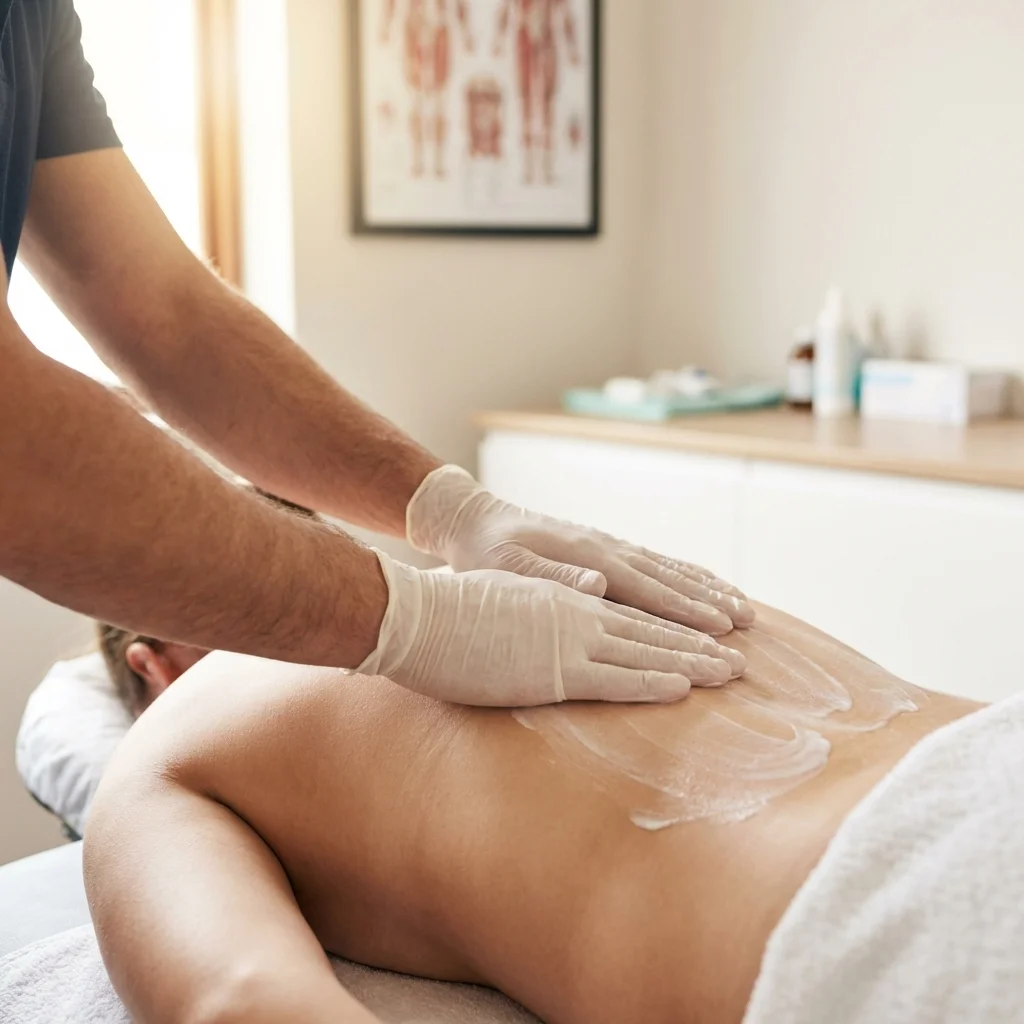
Clean and Dry the Skin First
Wash the area with mild soap and water, then dry it completely. Oils, sweat, and dead skin act as a barrier that blocks absorption. Don't layer it over sunscreen, lotion, or anything else.
Use the Right Amount
For diclofenac gel, the standard dose is 4 grams per application on the lower back -- roughly walnut-sized -- four times daily. Slathering on more won't help; the excess just sits on your skin without penetrating. For capsaicin, a thin even layer is all you need. If you can see a thick white coating, you've overdone it.
Rub In Thoroughly
Don't just slap it on and walk away. Massage the cream into the skin for 30-60 seconds with firm, circular motions. The physical action pushes ingredients deeper and increases local blood flow, both of which improve absorption. Then wash your hands immediately, especially after capsaicin. Touch your eye after applying it and you will regret it.
Timing Matters
Consistency beats intensity here. Apply at roughly the same times each day -- morning, midday, afternoon, and bedtime for four-times-daily products -- rather than doubling up when the pain spikes. Diclofenac's anti-inflammatory effects build up over days, not hours. Pairing topical treatments with natural pain relief strategies like heat therapy or gentle stretching can help as well.
Don't Combine With Heat Sources
This one trips people up. Never apply cream before using a heating pad, hot water bottle, or getting into a hot bath. Heat opens up blood vessels and increases skin permeability, which can lead to too much absorption and actual skin burns. This is especially dangerous with menthol and capsaicin. Wait at least an hour after applying cream, or just use heat at a different time of day.
Patch Testing
Before you cover your entire lower back with a new product, put a small amount on a 2-inch area of your forearm. Wait 24 hours. If you see significant redness, swelling, or burning that goes beyond mild warmth, try a different product. About 1 in 20 people react to topical NSAIDs.
When Topical Creams Aren't Enough
Topical creams have a ceiling, and it's worth knowing where it is so you don't spend months on something that was never going to be enough on its own.
Depth of Inflammation
Topical medications reach about 8-10mm into tissue. That's deep enough for facet joints and surface muscles, but spinal discs, deep ligaments, and the spinal canal are all further in. If your back pain comes from a herniated disc, central stenosis, or deep inflammatory arthritis, creams and gels are going to give you partial relief at best.
Widespread Pain
The Cleveland Clinic notes that topical NSAIDs are best for pain in a few localized joints. If the inflammation covers a large area or spans multiple spinal segments, the amount of cream you'd need starts running into dosage limits. Oral anti-inflammatories or systemic treatments make more sense at that point.
Signs It's Time to Escalate
- No meaningful improvement after 4 weeks of consistent, proper application
- Pain progressively worsening despite topical treatment
- Numbness, tingling, or weakness developing in your legs
- Morning stiffness lasting more than 30 minutes (suggests systemic inflammation)
- Pain waking you at night regularly
- Bladder or bowel changes (seek immediate medical attention)
Working on inflammation from the inside matters too. Dietary approaches like Mediterranean or DASH eating patterns can address systemic inflammation while topicals handle local flare-ups. Some people also get benefit from turmeric's anti-inflammatory properties, though the oral and topical routes target inflammation through different pathways.
Frequently Asked Questions
Can I use multiple topical creams at the same time on my back?
Some combinations are fine; others aren't. A menthol product for quick cooling followed by diclofenac gel an hour later is generally safe. But don't combine two NSAID products (even one topical and one oral) without medical guidance, and don't apply capsaicin over lidocaine -- the numbing hides the burn that tells you whether you're using too much capsaicin. Check with your pharmacist about specific pairings.
How long should I try a topical cream before deciding it doesn't work?
Diclofenac gel needs at least 2-4 weeks of consistent, four-times-daily use before you can call it a failure. Capsaicin requires 1-2 weeks past the initial burning phase, so about 3 weeks total. Menthol and lidocaine are different -- they should provide noticeable relief within minutes to hours. If they don't help right away, more time probably won't change that.
Are topical anti-inflammatory creams safe during pregnancy?
Most topical NSAIDs like diclofenac are not recommended during pregnancy, particularly in the third trimester. There isn't enough safety data on capsaicin in pregnancy either. Menthol-based products in small amounts are generally considered safer, but talk to your OB-GYN before using any topical pain product while pregnant.
Do topical creams interact with blood thinners or other medications?
The systemic absorption is much lower than with oral versions, but interactions can still happen. Diclofenac gel may increase bleeding risk if you're on anticoagulants like warfarin. Methyl salicylate (wintergreen-based products) is a bigger concern because salicylates affect platelet function. Let your doctor know about every topical product you use, especially if you take blood thinners.
Why does capsaicin cream burn so much at first?
Capsaicin hits TRPV1 receptors, the same ones that detect real heat. Your body reads this as a burn and releases substance P as part of the pain response. After 3-7 days of regular application, the local supply of substance P runs out and the burning fades. That desensitization is the whole point -- it's how the treatment works. If the burn gets intense, don't use ice or cold water, which can trap capsaicin against the skin. Wipe the area with vegetable oil or full-fat milk instead.
Related Articles
- Exercises for Lower Back Pain Relief — Targeted stretches and strengthening moves to complement your topical treatment routine.
- Sciatica Management and Recovery Guide — A detailed guide to managing nerve-related back pain, including when topical capsaicin fits into the treatment plan.
- Natural Remedies for Pain Relief — Alternative approaches that pair well with topical anti-inflammatory creams.
- Anti-Inflammatory Eating Patterns — How Mediterranean, DASH, and plant-based diets reduce chronic inflammation from the inside out.
- Health Benefits of Turmeric — The science behind turmeric's anti-inflammatory compounds and how they complement topical treatments.
Medical Disclaimer
This article is for informational and educational purposes only and is not medical advice, diagnosis, or treatment. Always consult a licensed physician or qualified healthcare professional regarding any medical concerns. Never ignore professional medical advice or delay seeking care because of something you read on this site. If you think you have a medical emergency, call 911 immediately.